
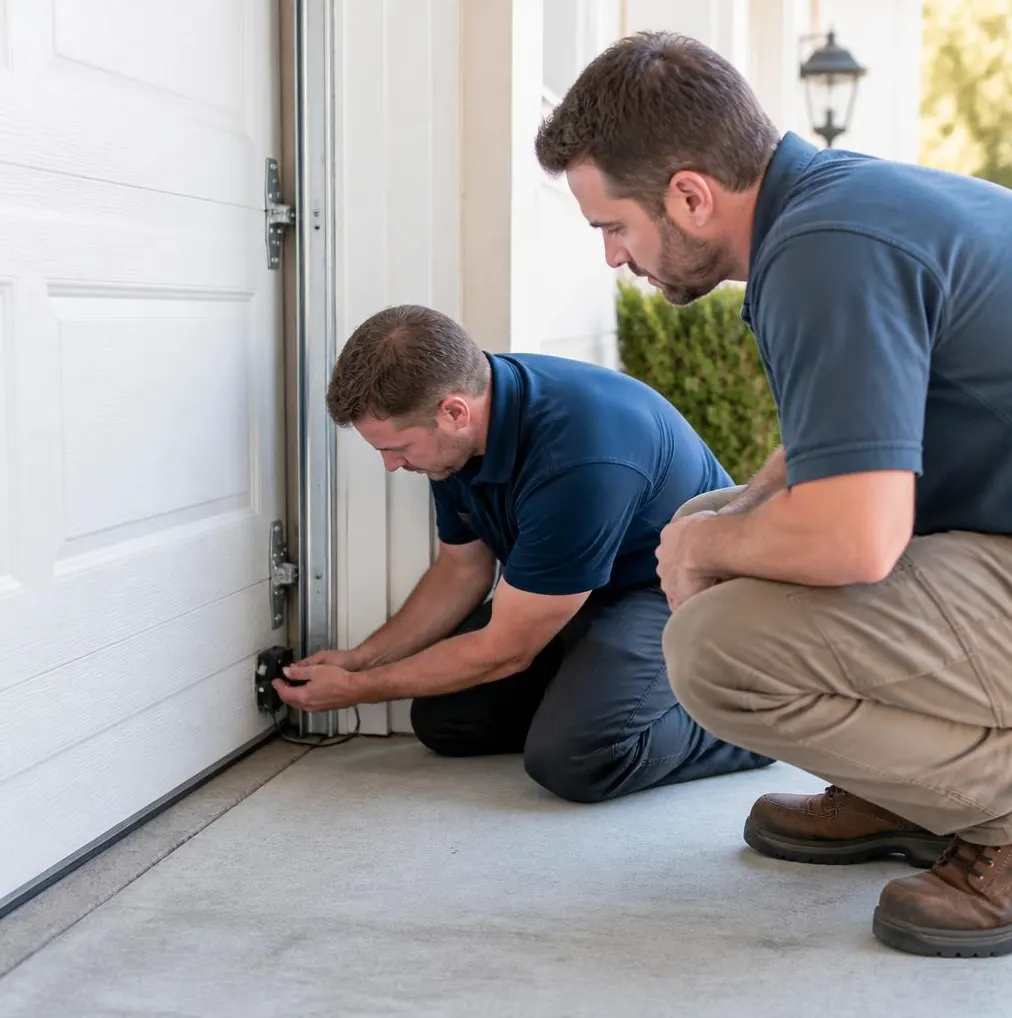
The moment you notice it
You're grabbing something off the shelf near the garage door and you see it: a thin line of daylight running along the bottom of the door, right where it meets the concrete. Or maybe it's not light — it's a dusting of fine grit on everything stored near the door, a damp stain creeping across the floor after a storm, or the unmistakable sign that something small and furry has been getting in. Once you notice it, you can't unsee it, and every cold draft or wet floor afterward gets blamed on that gap.
The good news: in most cases, this is one of the cheapest and most satisfying garage door fixes a homeowner can do. The bad news: in older houses around Rocky Hill, Wethersfield, and Cromwell, original garage doors often have outdated seal tracks or slightly non-standard dimensions, so it pays to know what you're dealing with before you buy parts.
What's actually failing
A garage door has three separate weatherstripping components, and they wear differently:
- Bottom seal (astragal): the rubber or vinyl strip along the floor edge. This takes the most abuse — door weight, grit, road salt tracked in on tires, and constant flexing.
- Side and top weatherstripping: vinyl strips (often with a J-shaped channel) nailed or stapled to the door jambs and header.
- Threshold seal (optional): a strip glued to the garage floor itself, useful on uneven slabs.
Freeze-thaw cycles are hard on all three. Rubber stiffens and cracks in the cold, then a thaw lets water seep through that crack before it refreezes overnight. Add salt brine dripping off cars all winter and the bottom seal degrades faster than people expect — often in 3-5 years even on a well-built door.
Tools you'll need
- Tape measure
- Utility knife
- Flathead screwdriver or small pry bar
- Replacement bottom seal (bulb-style or T-style, matched to your track)
- Replacement vinyl weatherstripping for sides/top, if needed
- Silicone-based garage door lubricant
- Broom or shop vac
- A second person, ideally — holding the door section steady while you work makes this much easier
Step-by-step: replacing the bottom seal
- Do the light test. Close the door at night with the garage lights off and look for daylight or gaps along the bottom and sides. Note where the gaps are worst — that tells you if it's just the seal or something else (a warped door, bent track, or uneven floor).
- Inspect the seal closely. Look for cracking, flattening, chunks missing, or a seal that's pulled out of its retainer track entirely. A seal that's merely dirty can sometimes be cleaned and re-seated rather than replaced.
- Measure before buying. Measure the width of the door and check the shape of the retainer track on the bottom of the door — it's usually a T-slot or a different channel shape. Bring the old seal to the hardware store if you're unsure; matching the track shape matters more than the brand.
- Clear the old seal. Raise the door slightly or prop it, then pull the old seal out of the track. It usually slides out lengthwise rather than peeling off. Clean out the track with a brush or vacuum — a season's worth of grit and salt residue builds up fast.
- Slide in the new seal. Feed the new bulb or T-shaped edge into the track from one end, working it through until it's seated along the full width. Trim any excess with a utility knife, leaving a small amount extra rather than cutting it flush.
- Lower the door and recheck. Close the door and run the light test again. The seal should compress evenly against the floor with no visible gap. If one side still shows light, the floor may be uneven, or the door itself may be slightly out of square — more on that below.
- Replace side and top weatherstripping if cracked. Pry out the old nailed or stapled strip, cut new vinyl weatherstripping to length, and tack it into place so it makes light contact with the closed door — not so tight it drags, not so loose it flaps.
- Lubricate hinges and rollers while you're in there. A seasonal pass with silicone lubricant on rollers, hinges, and the track helps the door close fully and evenly, which matters for proper seal contact.
What's a DIY job — and what isn't
Replacing a bottom seal or basic weatherstripping is well within reach for most homeowners with an afternoon and basic tools. Where it crosses into technician territory:
- The door won't sit flush no matter what seal you install — often a sign of spring tension or cable issues affecting how the door rests on the floor.
- The gap is uneven side to side, suggesting a bent track or a door that's gone out of square.
- The seal keeps tearing within months of replacement — usually a sign of a damaged track or a rough concrete edge chewing it up.
- Your garage floor itself is uneven or sloped, which calls for a proper threshold seal installed correctly, not just a thicker bottom seal.
When to call Rocky Hill Garage Door
If you've replaced the seal and still get drafts, water, or daylight, it's worth having a technician take a look rather than cycling through seal after seal. As part of a Garage Door Maintenance visit, we check spring balance, track alignment, and roller condition — all of which affect whether a new seal actually seals. If the door itself is warped or the track is bent, that's a Garage Door Repair call, and we'll tell you honestly whether a track adjustment will fix it or whether it's time to talk replacement, especially on older original doors common throughout Rocky Hill and Wethersfield.
Before the next nor'easter rolls through, give your door the light test. If you need a hand — or just want it done right the first time — call Rocky Hill Garage Door. We serve Rocky Hill, Wethersfield, Cromwell, Newington, Glastonbury, Berlin, Portland, and Middletown.